
When Nvidia’s CEO Jensen Huang announced the RTX 50-series at CES 2025, he made some performance-related claims that many enthusiasts rolled their eyes at. They weren’t wrong. At launch, those claims were far from true.
Now, over a year later, Nvidia might finally be delivering on promises made during CES 2025.
So, did the RTX 5070 really equal the RTX 4090?
Many people doubted those claims.
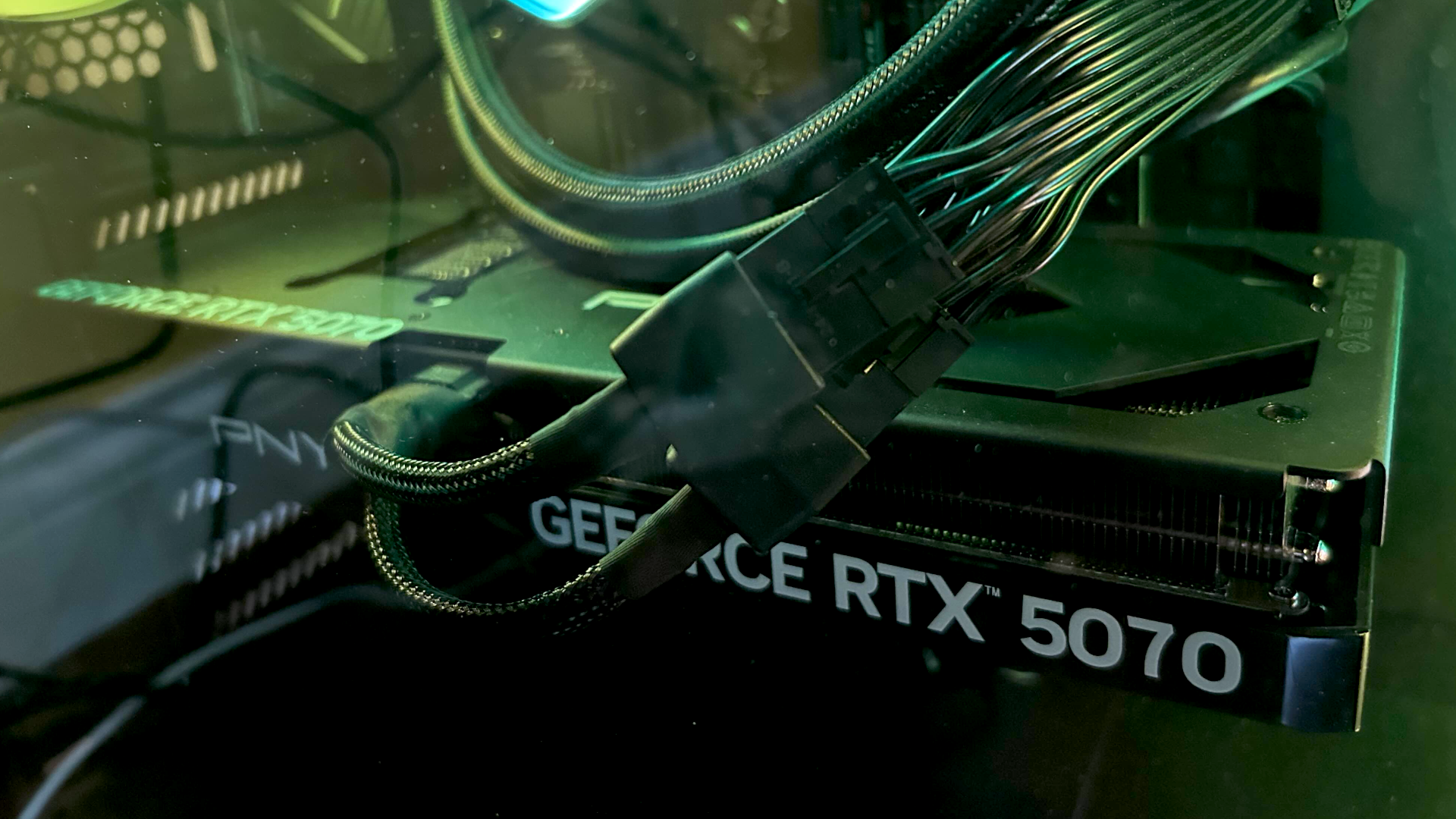
When the RTX 50-series was first announced over a year ago, the hype was definitely there. Although the jump from the RTX 40-series to the RTX 50-series was smaller than the upgrade from the 30-series, it was still substantial … for some cards. For the more mainstream models, the specs suggested incremental upgrades—nothing to get too excited about.
However, Huang made one promise that stood out and echoed throughout various tech publications: the RTX 5070 would offer RTX 4090 levels of performance at a $549 price point. This raised many eyebrows, for obvious reasons.
Spec-wise, the RTX 5070 had no shot of even breathing the same air as the RTX 4090. With nearly 10,000 fewer GPU shaders and half the VRAM, not to mention everything else, it was decidedly a mainstream card. But Nvidia had a card up its sleeve: DLSS 4. With Multi-Frame Generation, the RTX 5070 was said to offer similar performance to the RTX 4090 at a much smaller cost and power draw.
Reviewers were quick to verify those claims.
XDA Developers reviewed the RTX 5070 and measured it up against the RTX 4090. Across a test suite of 10 games played at 4K, the RTX 5070 averaged 52.8 fps versus the 88.9 fps achieved by the RTX 4090. The card came closer to the goal with DLSS 4 enabled, but it still wasn’t quite there.
Was anyone truly surprised when the ugly truth about the RTX 5070 came to light? I don’t think so. Only the greatest Nvidia fans believed that we’d get an RTX 4090-level card for $549. However, DLSS 4 was still good, even those claims were controversial.
DLSS 4 was great, it was just too big an ask
That didn’t make the tech any less transformational.
At launch, Nvidia’s DLSS 4 was only available on RTX 50-series GPUs, acting as an additional selling point for people who already owned the previous generation. After all, DLSS 4 introduced Multi-Frame Generation, generating up to three additional frames per rendered frame. And while I personally thought the claim that the RTX 5070 could replace the RTX 4090 was an unfair way of looking at these “fake frames,” DLSS 4 did deliver good results.
DLSS 4 was solid, with a huge boost to frame rates and limited quality issues, provided your GPU could already deliver a steady base fps. Forcing the RTX 5060 to run Cyberpunk on RT Overdrive at 4K was never meant to be pretty, and not even Nvidia’s AI-powered software stack could make it so, but every GPU benefited from DLSS 4 … just not enough to quite live up to that “RTX 4090 for $549” claim. But DLSS 4.5 is turning things around.
DLSS 4.5 might be the thing to close the gap
Mainstream GPUs, rejoice.
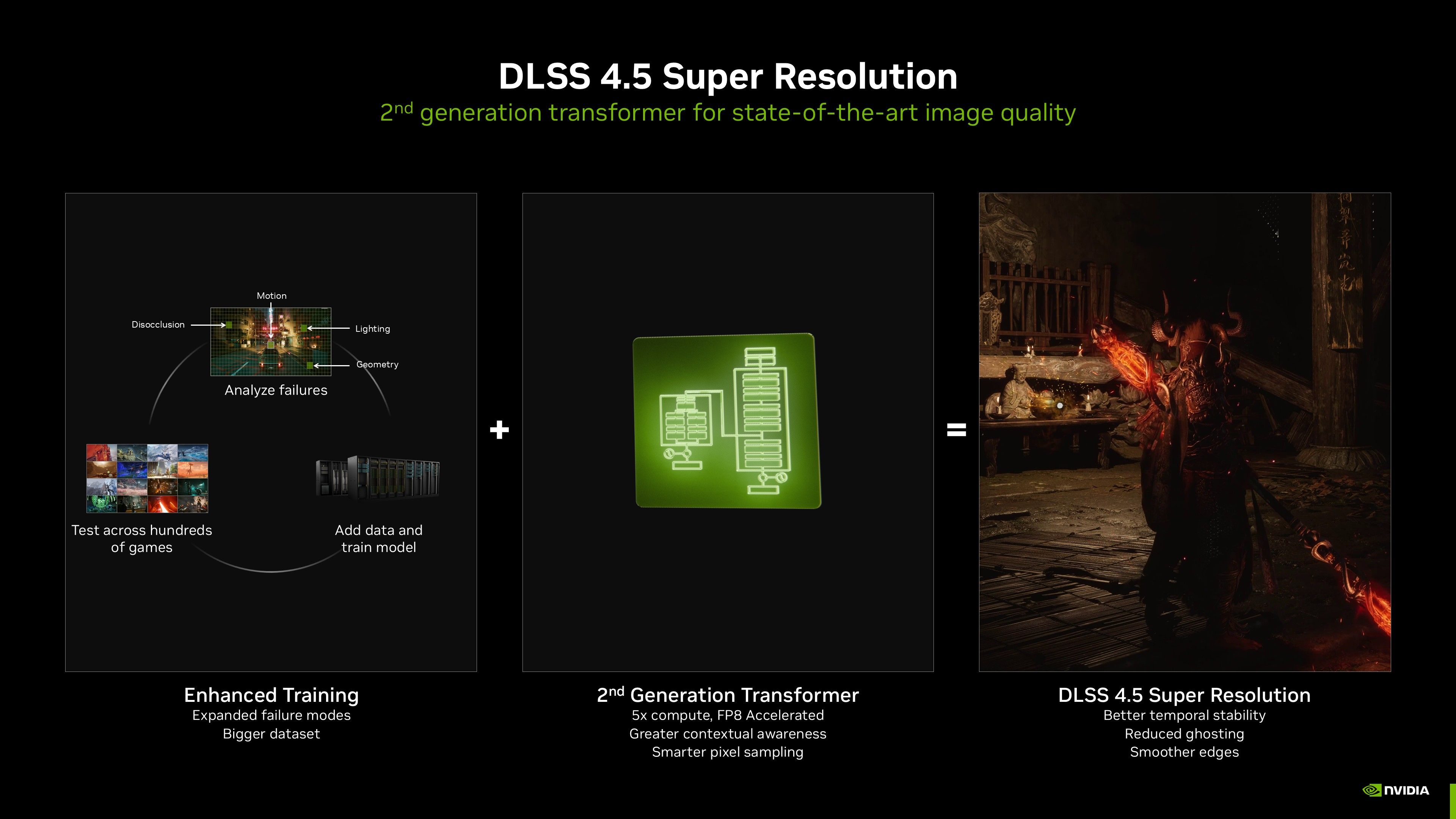
DLSS 4.5 is Nvidia’s big Super Resolution upgrade. For me, a big win right out the gate was that DLSS 4.5 was made available on all RTX GPUs, although the upcoming spring update will only launch on the RTX 50-series. Still, what the entire RTX lineup gets is fairly impressive.
Many reviews of DLSS 4.5 are already in, and the results are positive for those on newer hardware (RTX 40- and 50-series). Nvidia itself made it clear that older, RTX 20- and 30-series GPUs, might suffer a performance loss when using certain DLSS models. Some reviewers spotted fps drops of up to 20% when switching to DLSS 4.5 on older GPUs. As much as I don’t like that, it does make sense—the new model is a lot heavier, requiring 5x more compute than the original transformer.
As the owner of an RTX 40-series GPU, I’m seeing solid performance across the board. I have an RTX 4080 Super, so I had little to complain about to begin with, but running Cyberpunk 2077 in RT Overdrive feels smoother. I’m noticing cleaner reconstruction with next to no artifacts. Everything looks razor-sharp—almost too sharp for my liking.
Compared to DLSS 3, both the frame rates and the image quality just feel more stable. Without any DLSS enabled, I averaged around 80 fps; with DLSS 3, I was at around 130 fps with occasional jumps. DLSS 4.5 gave me a steady 145-150 fps regardless of what I was doing in the game.
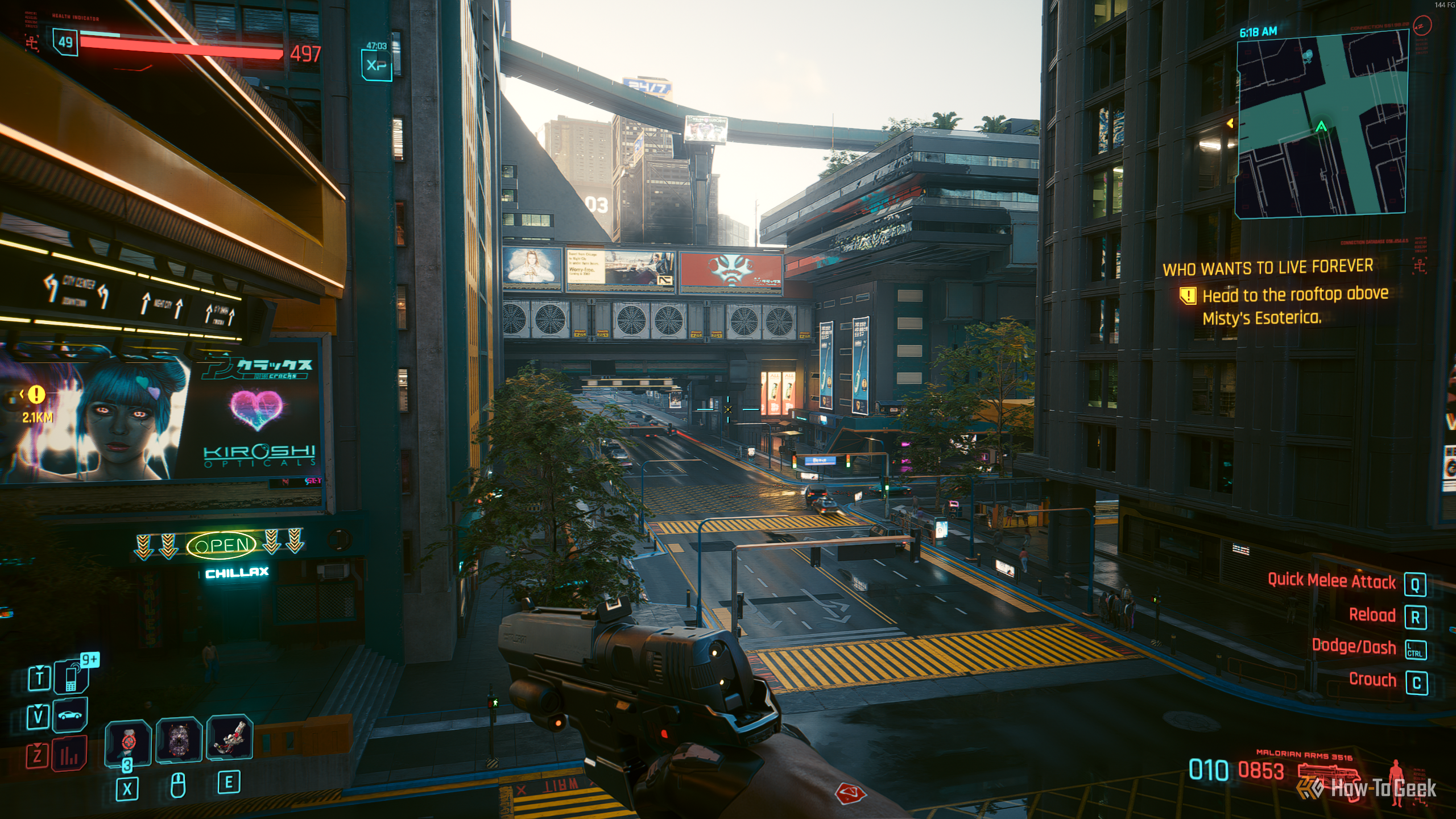
The biggest gains, for me, were on the visual side of things. It’s hard to deny that the image was sharper and stayed consistent throughout a few minutes of gameplay.
Nvidia’s RTX 5070 might finally meet its goal
If it’s not there yet, it’s on the way.
As far as frame rates go, DLSS 4.5 may not yet seem like this groundbreaking event that magically turns the RTX 5070 into an RTX 4090—but it’s a solid start.
The second-generation transformer model will make it easier for the RTX 5070, or cards like it, to use harsher DLSS modes without the image looking rough. This will offer a better experience across a range of titles, allowing you to switch away from the Quality preset and still maintain solid visuals while boosting performance. Switching to a higher resolution should also be possible while maintaining high settings.
The real game-changer might still be yet to come for DLSS 4.5. Set to arrive on the RTX 50-series in the spring, Dynamic Multi-Frame Generation will offer 6x MFG combined with dynamic FG. That’s where we might see the likes of the RTX 5070 reaching new heights.
For now, the RTX 5070 is still not an RTX 4090, but in some ways, it’s just as good. It might not be one of the best GPUs that launched in 2025 at its current price, but it’s a valuable mainstream pick that just got a major boost, and is yet to receive another one in a couple of months. That’s a win, even if it didn’t quite meet the high expectations Jensen Huang set for it upon its arrival.
